
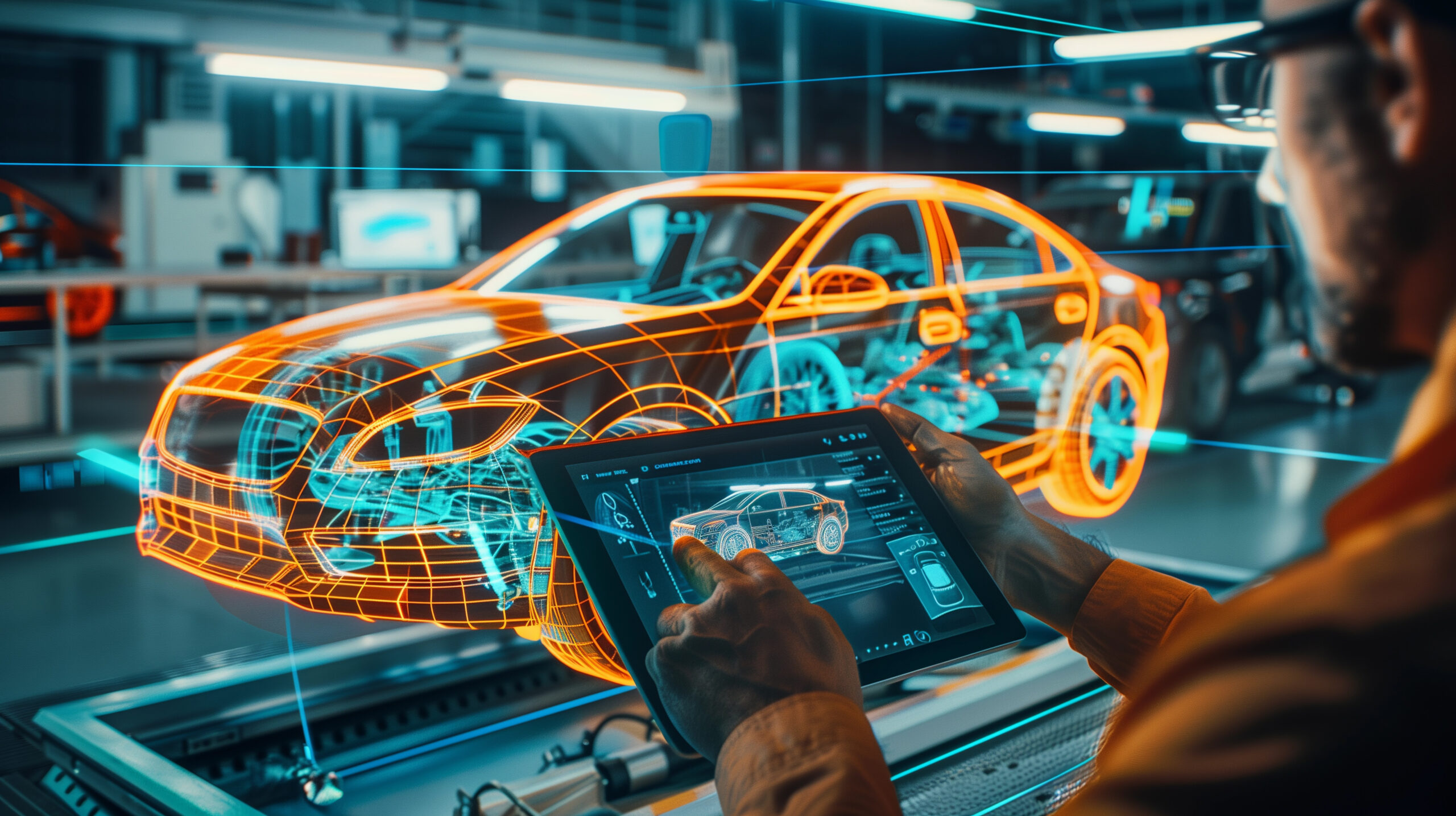
Technology for the New Era of Automotive

The automotive industry is going through its most significant transformation in a century. Electric vehicles, connected cars, shared mobility, digital retail, and AI-driven manufacturing are reshaping every part of the value chain from how vehicles are designed and built to how they’re sold, serviced, and experienced by the end customer. The businesses that adapt quickly will define the next era. The ones that don’t will be competing on price in a market that’s increasingly moving past them.

At Web Chip Armor, we work with vehicle manufacturers, auto component suppliers, dealerships, fleet operators, EV companies, and automotive technology businesses across India building the software, AI systems, and digital platforms that help them operate smarter, sell better, and deliver the kind of connected vehicle and customer experience the market is moving toward. We understand both the manufacturing side and the retail and service side of automotive. That breadth matters because the most valuable opportunities often sit at the intersection of the two.

What the Automotive Industry Is Actually Dealing With

The automotive businesses we work with are navigating several pressures simultaneously. On the manufacturing side quality defects that make it through inspection and show up as warranty claims, supply chain disruptions that stop production lines, and component traceability requirements that are becoming non-negotiable for export markets and regulatory compliance. On the retail side dealerships running on outdated DMS systems, losing leads they paid to generate because follow-up is manual and inconsistent, and service workshops that are underutilised because scheduling and customer communication are poorly managed.

And underneath everything the shift to EVs and connected vehicles is creating entirely new technology requirements that most automotive businesses don’t have in-house capability to address. Battery management, over-the-air updates, telematics platforms, vehicle health monitoring, and the customer-facing apps that connected vehicle owners expect these require software engineering depth that is genuinely new to the industry. We bring that depth.

What We Build for Automotive

Dealer Management and CRM Systems

Most dealerships are running on legacy DMS platforms that weren’t designed for the volume and complexity of modern automotive retail or on spreadsheets and disconnected tools that create the same problems. We build dealer management systems and CRM integrations that give dealerships full visibility into their lead pipeline, inventory, service bookings, and customer history in one place so no lead gets lost, no service opportunity gets missed, and management can see what’s actually happening across the dealership floor.

Lead capture, tracking, and follow-up automation across digital and walk-in channels

Test drive scheduling and appointment management with automated reminders

Inventory management for new and used vehicles with real-time availability

Finance and insurance (F&I) product management and deal structuring tools

Service booking, workshop scheduling, and job card management

Customer lifecycle management sales to service to repurchase

AI-Powered Lead Scoring and Sales Automation

Automotive dealerships generate leads from multiple sources website enquiries, OEM portals, walk-ins, phone calls, social media. The quality varies enormously and the follow-up capacity is finite. We build lead scoring systems that rank leads by purchase probability using behavioural signals, enquiry characteristics, and historical conversion data so your sales team spends time on the leads most likely to convert rather than working through a list sequentially.

Lead scoring using enquiry data, browsing behaviour, and source attribution

Automated follow-up sequences for digital leads SMS, WhatsApp, email

Sales team performance tracking and conversion funnel analytics

AI-assisted vehicle recommendation based on customer budget and requirements

Lost deal analysis and re-engagement trigger automation

OEM portal and aggregator lead feed integration CarDekho, CarWale, OLX Autos

Vehicle Telematics and Connected Vehicle Platforms

Connected vehicles generate continuous data location, speed, fuel level, engine health, driver behaviour, and dozens of other signals. Most of this data is either not being captured or not being used beyond basic GPS tracking. We build telematics platforms and connected vehicle applications that turn this data into value for fleet operators who need operational control, for OEMs who want ongoing customer engagement after the sale, and for insurance companies building usage-based products.

Vehicle telematics platform development data ingestion, storage, and real-time analytics

Driver behaviour monitoring harsh braking, acceleration, speeding, idle time

Connected vehicle mobile apps for owners vehicle health, location, trip history

Fleet management dashboards for commercial vehicle operators

Geofencing, trip recording, and location history for fleet and insurance applications

OBD-II and CAN bus data integration for vehicle health monitoring

Predictive Maintenance and Vehicle Health Monitoring

For fleet operators, vehicle downtime is lost revenue. For service workshops, the ability to identify a vehicle that needs maintenance before the owner notices a problem is a competitive differentiator. We build predictive maintenance systems that monitor vehicle health signals from telematics data, OBD diagnostics, and historical service records and flag vehicles approaching maintenance needs before failure occurs.

Vehicle health monitoring using OBD and telematics sensor data

Predictive failure models for engine, brakes, battery, and drivetrain components

Proactive service alert generation and customer outreach automation

Service history integration for maintenance pattern analysis

EV battery health monitoring and degradation prediction

Workshop demand forecasting based on predicted maintenance needs across fleet

Computer Vision for Manufacturing Quality Control

Auto component manufacturers and vehicle assembly plants face quality inspection challenges at production speeds that manual inspection cannot reliably handle. We build computer vision systems that inspect components and assemblies at line speed detecting surface defects, dimensional variance, assembly errors, and paint quality issues with consistency and detection accuracy that manual inspection cannot match.

Surface defect detection for body panels, castings, and painted components

Dimensional inspection and go/no-go gauging using vision measurement

Assembly verification correct component presence, orientation, and fastener torque

Weld quality inspection using vision and thermal imaging

Paint finish and coating quality inspection

Defect classification, trend analytics, and production quality reporting

Supply Chain and Parts Management

Auto component supply chains are complex, multi-tier, and highly time-sensitive a missing part stops a production line as surely as a machine breakdown. We build supply chain visibility and parts management systems that give manufacturers and dealers real-time visibility into parts availability, supplier delivery performance, and demand forecasting reducing stock-outs, optimising working capital, and ensuring the right parts are available when they’re needed.

Parts inventory management with demand forecasting and automatic reorder

Supplier performance tracking delivery adherence, quality reject rates, lead time

Component traceability for recall management and export compliance

Dealer parts ordering portal with real-time stock visibility

Warranty claim management and parts consumption analytics

GST-compliant invoicing and parts billing automation

EV and New Energy Vehicle Technology

Electric vehicles bring an entirely new set of software requirements battery management systems, charging infrastructure management, range prediction, over-the-air update capability, and the connected vehicle features EV owners expect as standard. We build software for EV manufacturers, EV fleet operators, and charging infrastructure providers from the vehicle-side software integration through to the customer-facing applications and operational management platforms.

EV fleet management platform charging status, range, scheduling, and optimisation

Charging station management software OCPP integration, load balancing, billing

Battery health monitoring and State of Charge / State of Health analytics

Range prediction using driving patterns, load, and ambient condition data

EV owner mobile app charging tracking, trip planning, vehicle health

OTA software update infrastructure for connected vehicle feature delivery

Technology We Use

Telematics and Vehicle Data

OBD-II, CAN bus, MQTT GPS and telematics hardware integration AWS IoT and Azure IoT Hub for cloud connectivity

Computer Vision

OpenCV, PyTorch Vision, YOLO, TensorFlow trained on automotive-specific defect and component datasets

AI and Machine Learning

Python, PyTorch, Scikit-learn, XGBoost for predictive maintenance, lead scoring, demand forecasting, and quality prediction

Mobile and Web

Flutter, React Native for vehicle owner and fleet manager apps React, Next.js for dealer portals and operational dashboards

Backend and APIs

Node.js, Python (FastAPI, Django), Java real-time vehicle data APIs, dealer system integrations, OEM portal connectors

EV and Charging

OCPP 1.6 and 2.0 for charging station integration battery management system data APIs range and battery health modelling

Data and Analytics

Apache Kafka for real-time telematics streaming InfluxDB and TimescaleDB for time-series vehicle data Power BI and Grafana for dashboards

Integrations

CarDekho, CarWale, OLX Autos lead APIs OEM dealer portals GST e-invoicing APIs Razorpay and PayU for payment collection

Why Web Chip Armor for Automotive?

We cover both the manufacturing and retail sides of automotive

Most technology vendors in automotive are specialised either in manufacturing systems or in dealer and retail technology. We work across both. That matters because the most significant operational improvements often require connecting data and workflows across the manufacturing-to-retail boundary traceability, warranty analysis, parts demand forecasting, and customer lifecycle management all span that divide.

We're ready for the EV transition

The shift to electric vehicles is not a future event it's happening now, and the software requirements it creates are fundamentally different from conventional automotive. We have built EV fleet management systems, charging infrastructure software, and battery health monitoring applications. We're not learning EV technology on your project.

We understand Indian automotive market realities

India's automotive market is one of the world's largest and most complex enormous price sensitivity at the entry level, strong growth in the premium and EV segments, a massive two and three-wheeler market, complex GST compliance for vehicle and parts transactions, and a dealer network that varies from sophisticated multi-brand operations to single-brand outlets. We build for this diversity rather than for a generic automotive market template.

We build for the connectivity constraints of Indian operations

Telematics platforms and fleet management systems for Indian commercial vehicles need to handle connectivity gaps rural routes with limited network coverage, devices that go offline and need to sync reliably when connectivity returns. We design for intermittent connectivity as a normal operating condition, not an edge case.

We measure impact in automotive terms

Lead conversion rate. Service booking utilisation. Defect escape rate. Fleet uptime percentage. Parts fill rate. These are the metrics that matter in automotive not system uptime or deployment frequency. We instrument every project to track the operational metrics that reflect actual business impact, so you can see whether the technology is working.

Frequently Asked Questions

Can you integrate with the OEM's dealer portal and lead management system?

In most cases yes, depending on what integration interfaces the OEM portal exposes. We have experience integrating with OEM dealer portals through API feeds, lead push webhooks, and in some cases file-based lead transfers where modern APIs are not available. We also integrate with lead aggregators CarDekho, CarWale, OLX Autos for digital lead consolidation into a single CRM. We assess what’s available from each source in the discovery phase and design around it.

How does your computer vision quality inspection handle different variants and colour options?

We train separate models or multi-class models for each product variant and finish, depending on the degree of difference between them. A surface defect model for a silver panel and a black panel requires different training data and often different model configurations because defect visibility varies significantly by colour and finish. We collect training images across all variants in production, not just the most common one, and validate performance on each variant separately before sign-off.

We operate a mixed fleet of petrol, diesel, and CNG vehicles can your telematics platform handle all of them?

Yes. Our telematics platforms are fuel-agnostic at the data layer they ingest OBD and GPS data regardless of powertrain type. The analytics and alerting logic is configured per vehicle profile, so fuel consumption benchmarks, maintenance triggers, and performance thresholds are appropriate to each vehicle type. EV-specific features battery state of charge, charging status, range estimation are additional modules that apply to electric vehicles in the fleet.

How long does it take to build a dealer CRM and lead management system?

A focused dealer CRM covering lead management, test drive scheduling, follow-up automation, and basic reporting typically takes ten to fourteen weeks. A more comprehensive dealer management system including inventory, service workshop, parts, and finance integration typically takes four to six months depending on the complexity of the integrations required. We scope precisely after understanding your current systems and the integrations needed, and we give you a fixed price before development begins.

Can you build the software for our EV charging network?

Yes. We build charging station management systems using the OCPP protocol supporting both OCPP 1.6 and 2.0 depending on your hardware with features including station health monitoring, session management, load balancing, user authentication, and billing. We also build the customer-facing mobile app for locating chargers, initiating sessions, and tracking charging history. If you’re managing a fleet of EVs alongside the charging infrastructure, we integrate the two so fleet operators can see vehicle charging status and schedule charging based on operational requirements.

Let's Talk About Your Automotive Technology Project

Whether you’re a manufacturer trying to automate quality inspection, a dealer group that wants a CRM that actually works, a fleet operator building out EV capability, or an automotive startup with a connected vehicle product to build we’d like to hear about it. We’ll give you a straight answer on what’s achievable, what it would take, and whether we’re the right team to build it.